How to Compare Local UK Fuel Prices with National Averages

A national petrol or diesel average can help you judge a forecourt price, but it cannot tell you what a particular station charges today. Check the latest official statistics, compare the same fuel type, then weigh any cheaper price against the cost of driving there.
Where to check UK petrol and diesel prices
Start with the Competition and Markets Authority’s road fuel price statistics, published through the Department for Energy Security and Net Zero. The collection provides UK fuel price statistics and associated releases, giving you national context for petrol and diesel prices. Check the date and fuel type for the figures you use: an average is a snapshot, not a live quote for every forecourt.
For nearby stations, use the UK Government’s fuel finder, which helps drivers find prices at petrol stations near them. Check the station and price details shown. If the journey only makes sense because of a small saving, look at the result again before setting off.
These two sources serve different purposes: the statistics give you a national reference point, while the fuel finder helps you compare stations nearby. Neither makes a national average a guarantee of the price at a specific forecourt. Use the station listing for your local comparison and keep its displayed price date or details in view.
Compare the same fuel and the same measure
Make sure the local price and the average refer to the same fuel. Compare petrol with petrol and diesel with diesel. If a listing identifies a particular grade, match that grade too; a cheaper price for one product does not show that another is cheaper.
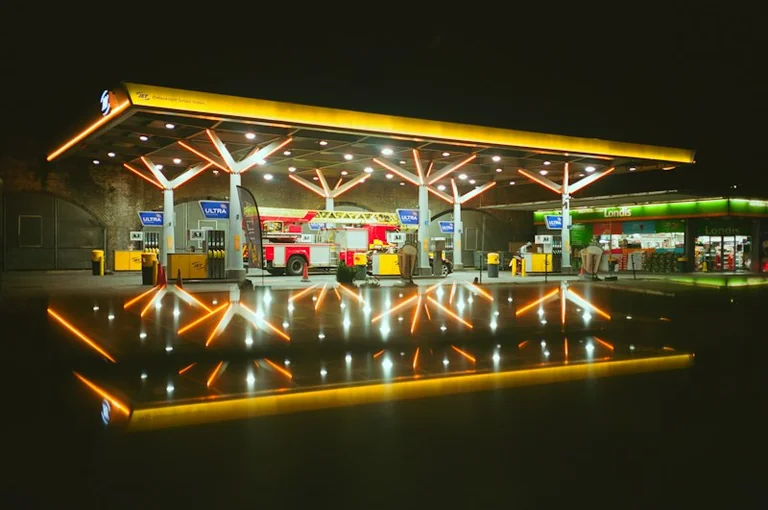
Also check the units and dates. UK pump prices are generally shown per litre, while a national statistic may refer to a period or publication date. Use the latest available figure as a point of comparison, and keep its date in mind. Prices can vary between stations and change after a statistic is published.
A useful comparison asks: is the nearby price below, close to or above the relevant national figure, and is the difference large enough to matter for the amount you plan to buy? The average can orient you, but it does not guarantee what you will pay at any named station. The comparison is most useful when both figures describe the same fuel and you account for how recently each was updated.
Work out whether a detour pays
A lower price per litre is only a saving if it outweighs the fuel used to reach the cheaper station. Estimate the extra distance for the round trip, then estimate the fuel that distance will use. Multiply those litres by the price per litre you would otherwise pay. Compare that travel cost with the saving on the litres you plan to buy.
For example, suppose another forecourt is 10 miles away by road, making the round trip 20 miles. If your car averages 40 miles per UK gallon, the detour uses about half a gallon, or 2.3 litres. At an illustrative fuel price of £1.50 per litre, that trip costs about £3.45 in fuel. These figures are examples, not current prices.
If you plan to buy 40 litres, a 5p-per-litre difference would save £2. That is less than the example’s detour fuel cost, before allowing for traffic or your time. If the cheaper station is already on your route, however, the extra distance may be negligible and the comparison could come out differently.
The calculation depends on the extra distance, your vehicle’s fuel use and the amount you intend to buy. A small per-litre gap can add up across a larger fill, but the same gap may not cover a dedicated journey. For a fair decision, use the extra round-trip distance rather than the station’s one-way distance.
A quick check before filling up
- Check the latest dated national figure for the fuel you use in the CMA statistics collection.
- Find nearby station prices with the Government fuel finder.
- Compare like with like: same fuel, grade where relevant, units and price dates.
- Estimate the round-trip distance and the fuel it would use.
- Compare the detour cost with the saving on the litres you expect to buy.
- Recheck the station listing before travelling if a small price difference is driving your decision.
The result is a more informed choice, not a promise that a displayed price will still be available when you arrive. For the final decision, the station’s current listed price and the cost of reaching it matter more than the national average alone.
Source: UK Government, Department for Energy Security and Net Zero
Context & actions About this article
Source check How to compare
National statistics provide context, while nearby station listings and a detour cost calculation help you assess a local price.
- Check the publication date and fuel type in the road fuel price statistics.
- Use the Government fuel finder to check nearby station listings.
- Estimate the round-trip fuel cost before making a detour.
- Source
- UK Government fuel finder
- Scope
- United Kingdom
- Updated
- 2026-10-19 09:22
Source check
Report a trust issue
Send a clear signal to community moderation if the source, facts or context need review.


Comments